You pay $20 a month for your AI subscription. You ask it to write an email, clean up some code, plan a trip. It feels almost free, cheaper than your coffee habit, cheaper than Netflix.
But behind that $20, something much bigger is going on. Companies are spending hundreds of billions of dollars just to keep that answer coming back to you in a couple of seconds. What you pay and what it actually costs to produce that answer are two very different numbers. And that gap is one of the more interesting stories in tech right now.
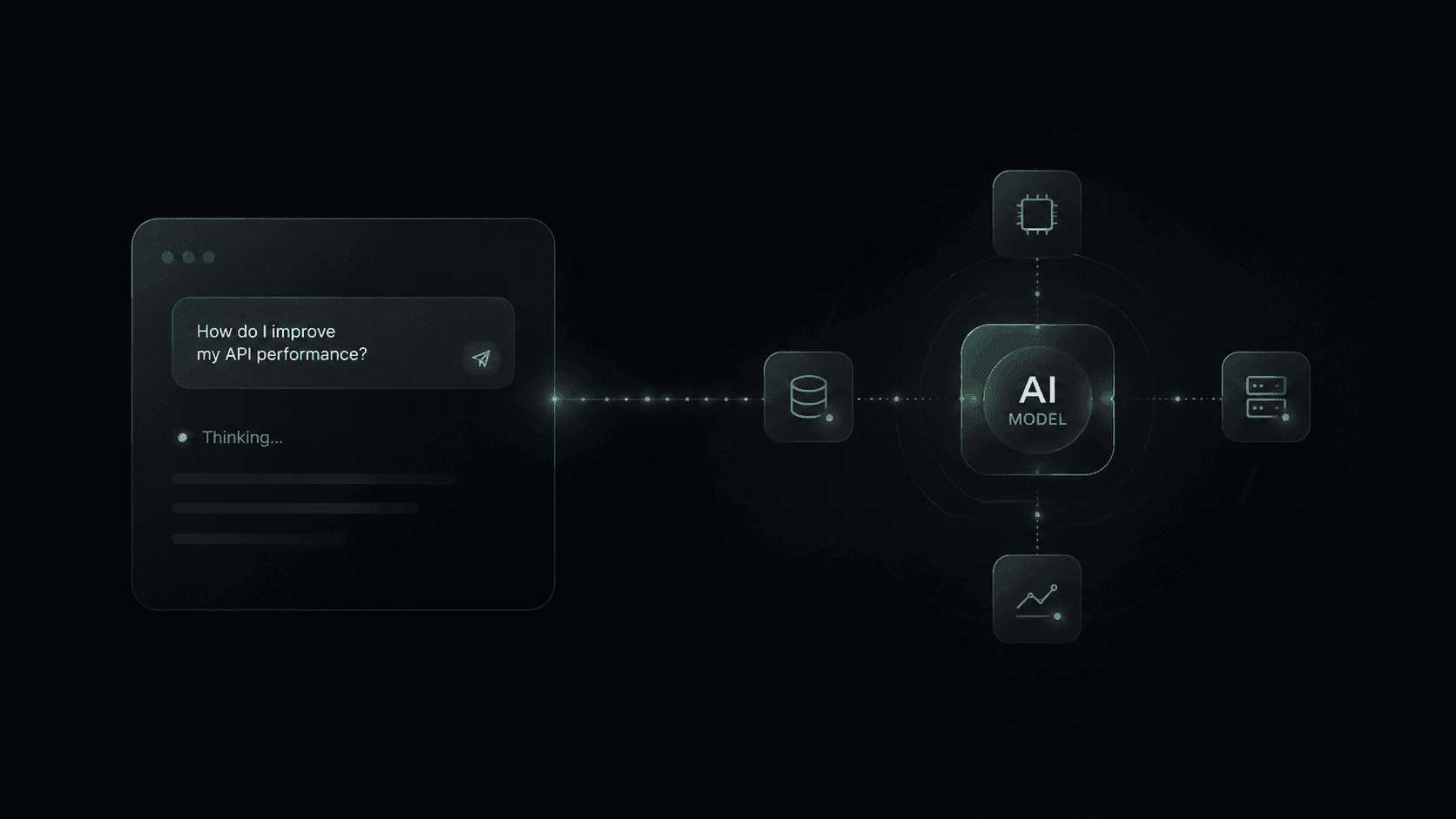
The price tag doesn't tell the whole story
Here's the strange part: AI really is cheap if you're just one person using it. A developer running dozens of code reviews and email drafts a day might spend a few cents. Someone writing blog posts all day might spend even less. At that level, calling AI "expensive" doesn't really hold up.
But stretch that out to millions of people doing the same thing, all day, every day, and the picture changes. Every time AI writes something back to you, it's doing more work than when it just reads your question.
Actually generating new words takes a lot more computing power than reading a prompt does. So a tiny cost, multiplied by an enormous number of people, turns into a very large bill somewhere else.
The price per question looks small. The total adds up to something else entirely.
The bill that never stops
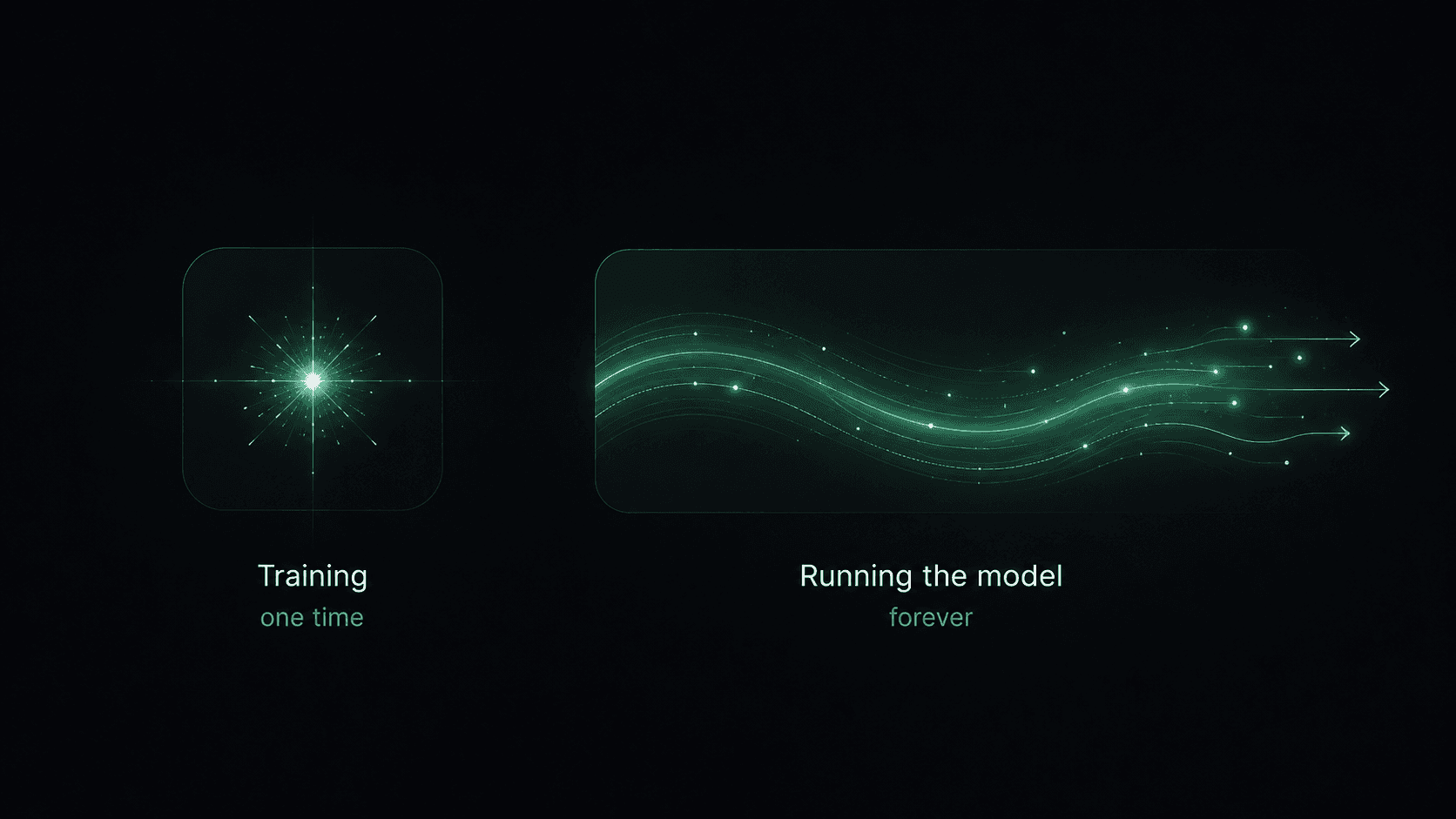
For years, the story around AI cost was about training and building the model in the first place. Back in 2020, training GPT-3 cost around $4.6 million. By 2024, training a GPT-4-level model had crossed $100 million. Now there's talk of the newest models costing over a billion dollars just to build.
That's a lot of money, but it's also a one-time cost. You build the thing once.
The part people talk about less is what happens after. Actually running the model, every day, for everyone using it. That ongoing cost, called inference, now eats up the majority of what companies spend on AI. OpenAI has reportedly spent over $700,000 a day just to keep ChatGPT running. Not to build it but just to keep the lights on.
Training happens once. Running it never really stops.
The scale is genuinely hard to picture
Step back even further, and the numbers get almost impossible to wrap your head around. Spending on AI infrastructure from the data centers, the chips, all of it is closing in on a trillion dollars a year in 2026. Adjusted for inflation, that's already more than what it cost to build the entire U.S. highway system, a project that took four decades to finish.
This isn't just an abstract number either. It's already shaping real decisions. Some companies have started openly discussing whether to move engineering work overseas, simply because the cost of running AI coding tools has climbed so much.
When infrastructure spending this large starts influencing hiring decisions, it stops being a background story and starts being something that actually touches people's jobs.
The costs hiding in the fine print
Even setting aside training and the day-to-day running costs, there's a whole layer of expenses that rarely gets talked about:
- Storing all the data: Companies training AI on their own information can end up paying tens of thousands of dollars a month just to keep it stored.
- Retries you never see: When a request fails, systems often quietly try again, sometimes doubling or tripling the cost of a single question without anyone noticing.
- AI agents doing multi-step tasks: When AI browses the web, writes code, and checks its own work across several steps, it can use many times more resources than a simple question and answer.
- Tools nobody's tracking: Employees quietly expensing AI tools on their own, with no one in the company keeping an eye on how much it's all adding up to.

It's not as bleak as it sounds
To be fair, this isn't really a story about AI being unaffordable for everyone. If you're a single person or a small team, the cost is genuinely tiny since a few dollars a month covers a surprising amount of use, and cheaper models have gotten good enough that the gap between "budget" and "premium" barely matters for most everyday tasks anymore.
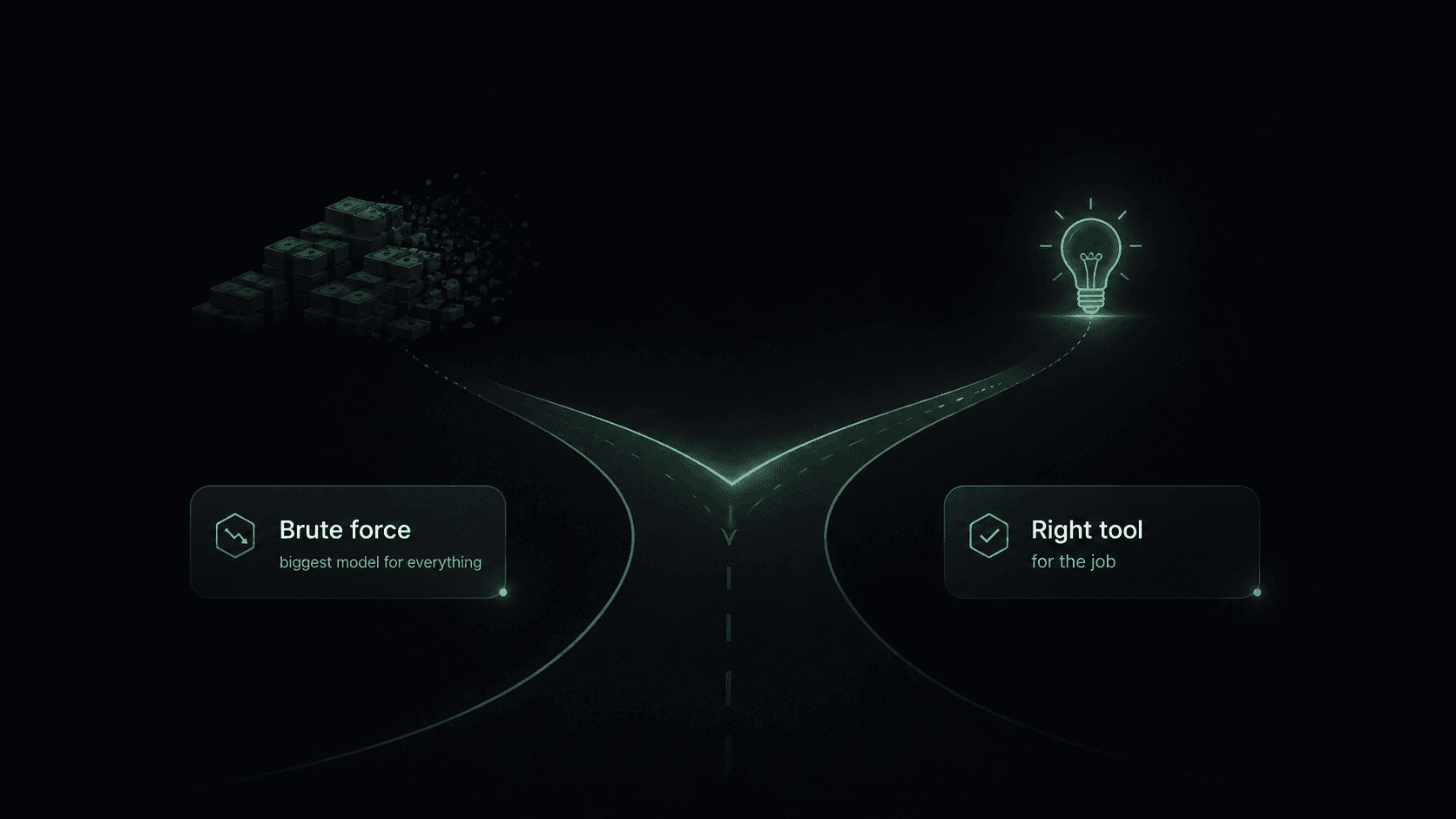
There's also a smart way around a lot of this for bigger companies. Instead of using one expensive, top-tier model for absolutely everything, teams are learning to split the work. Let a strong model handle the hard thinking, and hand the repetitive, simple parts to a much cheaper model. Companies doing this are cutting their costs dramatically compared to teams that just throw the most expensive option at every single task.
So the high cost isn't unavoidable. A lot of the time, it comes down to using AI a little carelessly — reaching for the most powerful tool even when a simpler one would've done the job just fine.
Where this is probably headed
Here's my honest guess at where this all goes next: that $20-a-month price tag is basically a discount, not a long-term plan.
Companies are pricing well below what it actually costs them to serve you right now, trying to win users while they can, not unlike how ride-share apps once sold rides for way less than they cost to provide. That kind of thing doesn't last forever.
As these companies come under more pressure to actually turn a profit, don't be surprised if flat monthly pricing starts giving way to pricing based on how much you actually use, where heavy users start paying something closer to the real cost of running their requests.
The people and companies who come out ahead probably won't be the ones with access to the biggest, most powerful models. They'll be the ones who learn to use AI a bit more thoughtfully by picking the right tool for the job instead of the biggest one available.
AI isn't getting cheaper on its own. We're just slowly getting better at not paying for more of it than we actually need.
References
- Devstars — "AI Model Costs 2026: How to Stop Wasting Money on the Wrong Ones"
- Finout — "AI Model Cost Breakdowns: The Complete 2026 Comparison Guide"
- Josh Bersin — "AI Prices Are Going Up, Up, Up — And What This Means For Enterprise AI"
- CloudZero — "How Much Does AI Cost? The Complete Guide For 2026"
- Oplexa — "AI Inference Cost Crisis 2026: Why Your AI Bill Is Exploding"
- DEV Community — "The Direction of AI in 2026: Performance, Cost, and the End of One Model for Everything"
- Zylo — "AI Pricing: What's the True AI Cost for Businesses in 2026?"
- Remote OpenClaw — "Cheapest AI Models in 2026 — Every Provider's Pricing Compared"
- ExplainThisTech — "Why Are AI Models Getting More Expensive to Train and Run? 7 Key Drivers"